Introduction
When it comes to creating a salad bowl that’s more than just leafy greens, balancing your macronutrients—protein, carbohydrates, and fats—is the key. A well-balanced salad fuels your body, keeps you full, and supports your fitness or weight management goals. Without proper balance, even the healthiest salad can leave you hungry or low on energy.
The Importance of Proteins
Protein is the foundation of a filling salad bowl. It supports muscle repair, boosts satiety, and keeps cravings at bay. Lean sources like grilled chicken, tofu, chickpeas, boiled eggs, or salmon ensure that your salad packs strength into every bite. Pairing plant-based and animal proteins gives variety while making your bowl suitable for different diets.
Carbohydrates for Energy
Carbs are often misunderstood, but they’re essential for energy and overall nutrition. Including complex carbs like quinoa, brown rice, sweet potatoes, or whole grains in your salad provides sustained energy and dietary fiber. These slow-digesting carbs not only aid digestion but also help balance blood sugar levels.

Healthy Fats for Flavor & Satiety
Fats play a vital role in absorbing fat-soluble vitamins (A, D, E, and K) and keeping your salad satisfying. Avocado slices, nuts, seeds, and a drizzle of olive oil are excellent additions that offer healthy fats without going overboard. When portioned correctly, fats enhance flavor while helping you feel full longer.
Putting It All Together
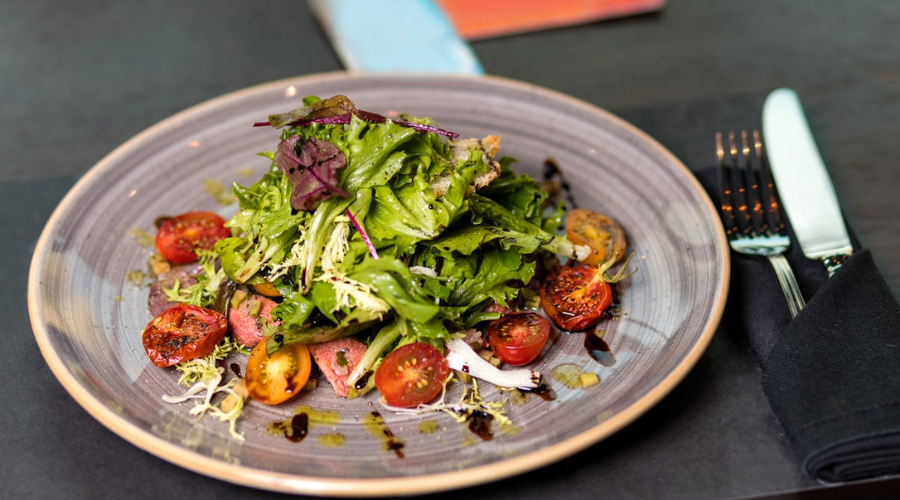
The magic lies in combining all three macros in the right proportions. A balanced salad bowl might include leafy greens as the base, quinoa for carbs, grilled chicken for protein, avocado for fats, and a light lemon-olive oil dressing. This approach ensures every bite delivers nutrition, taste, and lasting satisfaction—making your salad a complete meal instead of just a side dish.
How to Balance Macros in Your Salad Bowl
- Protein First – Add lean proteins like chicken, tofu, or beans.
- Smart Carbs – Choose whole grains, legumes, or root vegetables.
- Healthy Fats – Include avocado, nuts, seeds, or olive oil.
- Portion Control – Avoid overloading one macro while neglecting others.
- Variety Matters – Mix plant-based and animal sources for balance.
- Greens & Veggies – Always add fiber-rich vegetables for micronutrients.
- Dress Wisely – Pick light, nutrient-dense dressings that complement your macros.
Conclusion
Balancing macros in your salad bowl transforms it from a light snack into a powerful, nutrient-dense meal. By combining lean proteins, complex carbs, and healthy fats, you create a bowl that fuels your body, satisfies hunger, and supports long-term health goals. The right balance ensures your salad isn’t just healthy but also enjoyable and sustainable as part of your lifestyle. With every balanced bite, you move closer to building meals that nourish both body and mind.